

Introduction to Raman Spectroscopy
Raman spectroscopy is a sophisticated analytical technique used for chemical analysis and understanding the molecular composition of materials. It is a non-destructive method that provides detailed insights into the chemical structure, phase, and crystalline nature of a sample. By analyzing the light scattered by molecules upon illumination with laser light, Raman spectroscopy unveils a wealth of information about the material under investigation. This article delves into the multifaceted process of raman spectroscopy analysis, its applications, and the technological advancements that have enhanced its capabilities.
● Understanding Raman Spectroscopy
At its core, Raman spectroscopy focuses on the Raman scattering phenomenon, where light interacts with the molecular vibrations of a sample. This interaction leads to the scattering of light at wavelengths different from the incident light. The resulting Raman spectrum is characterized by peaks corresponding to specific molecular bonds and vibrations, serving as a molecular fingerprint for identifying and analyzing materials.
The History and Evolution of Raman Spectroscopy
Raman spectroscopy has a rich history of development, marked by key innovations and contributions from prominent scientists. The technique traces its origins to the discovery of the Raman effect by C.V. Raman and K.S. Krishnan in 1928. Over the decades, advancements in laser technology, spectrometer design, and detector capabilities have significantly enhanced the sensitivity and resolution of Raman spectroscopy, allowing it to become a vital tool in both academic research and industrial applications.
Fundamental Principles of Raman Scattering
Raman scattering occurs when light interacts with a molecule, resulting in inelastic scattering where the scattered light has different energy than the incident light. This differs from Rayleigh scattering, which involves elastic scattering without a change in wavelength. Raman scattering provides vital information about molecular vibrations and bonds, enabling detailed chemical analysis.
● Molecular Interactions and Light Scattering
The process of Raman scattering hinges on the interaction of laser light with molecular vibrations, which are influenced by the chemical structure and environment of the molecules. The intensity and position of Raman peaks provide insights into molecular interactions, intrinsic stress, and crystallinity, making it a powerful tool for both qualitative and quantitative analysis.
Understanding Raman Spectra
Interpreting Raman spectra involves identifying characteristic peaks associated with specific molecular bonds and vibrations. Each peak in a Raman spectrum acts as a fingerprint for a particular bond or group of bonds, enabling the identification and differentiation of materials based on their molecular structure.
● Peak Identification and Molecular Bonds
Raman spectra exhibit peaks corresponding to various molecular vibrations, such as C-C, C=C, N-O, and C-H bonds. By analyzing these peaks, researchers can determine the chemical composition and structure of a sample. Raman spectroscopy libraries, containing thousands of spectra, aid in the rapid identification of materials through spectral matching.
Applications of Raman Spectroscopy
Raman spectroscopy finds applications across diverse fields, from pharmaceuticals to materials science and forensic analysis. Its ability to provide non-destructive, detailed chemical information makes it invaluable for research, quality control, and forensic investigations.
● Use in Various Industries and Research Fields
In the pharmaceutical industry, Raman spectroscopy is employed for quality control, drug formulation analysis, and polymorph identification. In materials science, it aids in characterizing polymers, semiconductors, and carbon-based materials. The technique also plays a crucial role in geological studies, environmental analysis, and the authentication of art and archaeological artifacts.
The Role of Raman Spectroscopic Techniques
Raman spectroscopy has evolved to encompass various techniques that enhance its analytical capabilities. These include confocal Raman microscopy, surface-enhanced Raman scattering (SERS), tip-enhanced Raman scattering (TERS), and integration with other microscopy techniques.
● Confocal Raman Microscopy and Imaging
Confocal Raman microscopy allows for the analysis of microscopic samples with high spatial resolution. By focusing the laser onto a small volume, researchers can obtain detailed Raman spectra from specific regions within a sample. This technique is particularly useful for analyzing multilayered samples, contaminants, and inclusions within transparent materials.
● Advanced Techniques: SERS and TERS
Surface-enhanced Raman scattering (SERS) enhances the Raman signal by utilizing metal nanoparticles. This technique is highly sensitive, enabling the detection of low-concentration analytes. Tip-enhanced Raman scattering (TERS) combines atomic force microscopy with Raman spectroscopy, allowing for nanoscale chemical mapping and analysis.
Instrumentation and Technology in Raman Spectroscopy
The components of a Raman spectrometer, including the laser source, spectrometer, and detector, are integral to the technique's success. Recent technological advancements have improved the precision, sensitivity, and speed of Raman analysis, expanding its applicability.
● Components of a Raman Spectrometer
A typical Raman spectrometer comprises a laser light source, a sample holder, a spectrometer for dispersing the scattered light, and a detector for capturing the Raman spectrum. Recent innovations, such as high-power lasers, holographic gratings, and CCD detectors, have enhanced the accuracy and efficiency of Raman spectroscopy.
● Recent Technological Advancements
Advancements in instrumentation, such as the integration of Raman spectroscopy with other techniques, have broadened its applications. Hybrid systems, combining Raman with photoluminescence, electron microscopy, and atomic force microscopy, offer comprehensive insights into material properties at multiple scales.
Qualitative and Quantitative Raman Analysis
Raman spectroscopy serves as both a qualitative and quantitative analytical tool, providing chemical identification, concentration analysis, and insights into molecular interactions.
● Distinguishing and Identifying Chemical Substances
The unique Raman spectrum of a material serves as its chemical fingerprint, allowing for quick identification and differentiation from other substances. By comparing the spectrum to spectral libraries, researchers can accurately identify materials and detect impurities or contaminants.
● Concentration Analysis Using Spectral Intensities
The intensity of Raman peaks is directly proportional to the concentration of molecules within a sample. Calibration procedures enable the determination of concentration relationships, facilitating routine quantitative analysis. Chemometric techniques may also be employed for complex mixtures.
Challenges and Limitations of Raman Spectroscopy
Despite its versatility and power, Raman spectroscopy has certain challenges and limitations, particularly when dealing with specific sample types or interfering fluorescence.
● Difficulties with Certain Sample Types
Raman spectroscopy can be challenging for samples with high fluorescence or low Raman scattering cross-sections. Metals and alloys typically do not produce significant Raman signals. However, advancements in instrumentation and techniques, such as SERS, have mitigated some of these challenges.
● Solutions and Improvements
Ongoing research and technological improvements continue to address the limitations of Raman spectroscopy. Enhanced sensitivity detectors and the development of fluorescence-suppressing methods have expanded its applicability to more complex samples.
The Future of Raman Spectroscopy
The future of Raman spectroscopy is promising, with emerging trends and potential developments poised to further enhance its capabilities and applications.
● Emerging Trends and Potential Developments
Advancements in artificial intelligence and machine learning are expected to revolutionize Raman data analysis, enabling faster and more accurate interpretation of spectra. Additionally, the integration of Raman spectroscopy with other analytical techniques will provide comprehensive solutions for complex analytical challenges.
● Integration with Other Technologies and Methods
The integration of Raman spectroscopy with complementary techniques, such as infrared spectroscopy, mass spectrometry, and chromatography, offers a holistic approach to chemical analysis. Combined methodologies provide a more profound understanding of material properties and interactions.
Conclusion
Raman spectroscopy remains a cornerstone of chemical analysis due to its non-destructive nature and ability to provide detailed molecular information. With continuous advancements in technology and instrumentation, its potential applications continue to expand across various scientific and industrial fields.
About YIXIST Technology Co., Ltd.
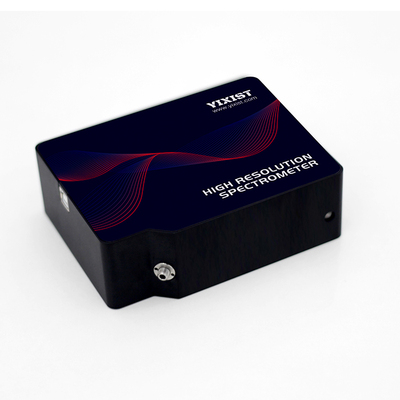
YIXIST Technology Co., Ltd. is a forward-thinking company specializing in cutting-edge optical measurement technology. The company excels in the research, development, manufacturing, and sales of intelligent equipment. Founded by dedicated professors and engineers, YIXIST is committed to innovation and quality, aiming to be a premier supplier and technology leader in intelligent equipment manufacturing. Through its proprietary technologies and sustainable R&D capabilities, YIXIST offers comprehensive solutions for scientific research and industrial applications, ensuring maximum value creation for clients worldwide.
Post time: 2024-11-18 17:02:02