

Introduction to IR Spectroscopy
● Historical Context and Evolution
Infrared (IR) spectroscopy, a critical tool in the analysis of chemical compounds, has a rich history that traces its roots back to the early 1900s. The method was pioneered by William Weber Coblentz, who demonstrated that chemical functional groups exhibit specific and characteristic IR absorptions. His groundbreaking work led to the collection of IR spectra for approximately 135 compounds, producing data that scientists still reference today. The method gained significant traction during World War II when there was an urgent need to characterize synthetic rubber formulations for the war effort. This period marked the beginning of commercial instruments, with leading companies like Beckman and Perkin Elmer entering the market. By 1957, Perkin Elmer had introduced the first cost-effective IR spectrophotometer, making the technology more accessible to scientists and industries globally.
● Technical Aspects of IR Spectroscopy: Understanding the Basics
The mid-IR spectrum, characterized by wavelengths ranging from 2.5 to 50 micrometers, is the focal point of IR spectroscopy. This range is correlated with bond energies using wavenumbers, measured in cm⁻¹. The corresponding wavenumbers for the mid-IR spectrum fall between 4000 to 200 cm⁻¹. This method, particularly sensitive to molecules with heteronuclear bonds and asymmetric molecular vibrations, contrasts with Raman spectroscopy, which is sensitive to homonuclear bonds and symmetric vibrations. Both IR and Raman spectra are considered unique fingerprints for chemical compounds, providing essential data for various qualitative analyses.
Commercial Advancements
● From Bulky to Portable Instruments
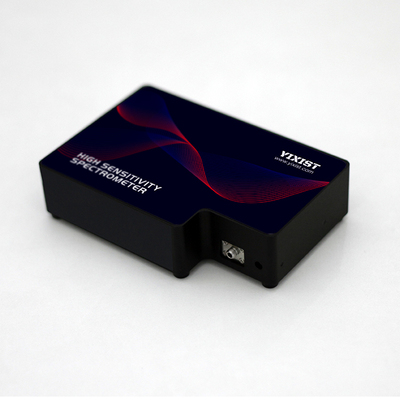
The development of IR spectrometers from cumbersome, expensive machines to compact and portable devices is a testament to technological innovation. The advent of Fourier Transform IR (FT-IR) spectroscopy in the late 1960s and early 1970s significantly enhanced the speed and accuracy of spectral analysis. By utilizing signal averaging, FT-IR instruments could produce high-quality spectra in a matter of seconds. Over the years, the size of these instruments has reduced dramatically, with modern versions nearing the dimensions of a smartphone. This transformation has made high-quality ir spectroscopy instruments widely accessible across various fields, encouraging further research and application development.
● The Role of Custom IR Spectroscopy Instruments
With the increasing demand for specialized analysis, the need for custom IR spectroscopy instruments has risen. Manufacturers and suppliers are developing tailored solutions to meet specific industry requirements, particularly for applications requiring unique configurations or enhanced capabilities. Custom IR spectroscopy instruments provide flexibility and innovation, ensuring precise and reliable outcomes for complex analytical challenges.
Innovative Sampling Techniques
● ATR and Their Impact
The introduction of attenuated total reflection (ATR) accessories has revolutionized sampling techniques in IR spectroscopy. ATR allows for the routine measurement of samples without needing extensive preparation, which was previously required to form a thin film for transmission spectra. The sample contacts an internal reflection element (IRE), commonly made from synthetic diamond due to its chemical inertness and IR transparency. This technique penetrates the sample only a few micrometers, allowing the analysis of highly absorbing samples like aqueous solutions with minimal preparation. As a result, ATR has become the predominant method for collecting IR spectra, driving the demand for high-quality IR spectroscopy instruments.
IR Microscopy
● Enhancing Spatial Resolution and Analysis
The development of IR microscopy has significantly enhanced the spatial resolution capabilities of IR spectroscopy. Initially limited by the reduced light throughput of micro-sized samples and long scan times, IR microscopy has advanced with the incorporation of FT-IR instruments. The improved efficiency, coupled with linear and two-dimensional array detectors and motorized stages, allows for detailed IR maps and images of micrometer-sized spatial domains. These advancements facilitate IR analysis in various modes, including transmission, reflection, and ATR microspectroscopy, expanding the analytical possibilities for researchers and industries alike.
Coupling Techniques
● IR Spectroscopy with Other Technologies
Recent years have seen IR spectroscopy being integrated with technologies like atomic force microscopy (AFM), resulting in innovative analytical solutions. AFM-coupled IR microscopes enable high-resolution spectral analysis on spatial domains smaller than the wavelength of light itself. Despite their high price tag, these advanced systems offer unparalleled precision and are invaluable for specific high-resolution applications. Similarly, IR microscopes equipped with tunable IR lasers provide significant advantages in specific applications, although their limited spectral range restricts routine use. These hybrid systems underscore the potential of IR spectroscopy instruments in delivering customized and highly accurate analytical results.
Applications Across Diverse Fields
● Versatility of IR Spectroscopy
IR spectroscopy's versatility is evident in its widespread applications across numerous fields. From chemical characterization and forensic analysis to planetary modeling and climate monitoring, IR spectroscopy instruments serve as essential analytical tools. They play a crucial role in disease detection, chemical threat assessment, and many other areas where precise molecular analysis is fundamental. The ability to deliver detailed spectral information makes IR spectroscopy indispensable in both research and practical applications, driving demand for custom IR spectroscopy instruments from leading manufacturers and suppliers worldwide.
IR Spectroscopy in Research and Development
● Ongoing Innovations
The field of IR spectroscopy is ever-evolving, with continuous advancements enhancing the sensitivity, specificity, and application scope of IR spectroscopy instruments. Emerging trends, such as the integration of artificial intelligence and machine learning in spectral analysis, promise to further refine data interpretation and increase efficiency. These innovations are pivotal in contributing to scientific breakthroughs and discoveries, underscoring the method's critical role in advancing various scientific domains. As research and development efforts continue, the possibilities for IR spectroscopy instruments in delivering accurate and reliable analysis are boundless.
Challenges and Limitations
● Addressing Technological Barriers
Despite its many advantages, IR spectroscopy faces challenges and limitations that must be addressed to maximize its potential. The high costs and complexity associated with advanced IR systems can be prohibitive, especially for smaller laboratories and organizations. Moreover, limitations in spectral range and spatial resolution present further barriers. Manufacturers and suppliers, including OEM IR spectroscopy instrument manufacturers, are working on solutions to overcome these issues, offering high-quality and cost-effective options to meet the diverse needs of industries and researchers.
Conclusion
● The Future of IR Spectroscopy in Analytical Science
IR spectroscopy remains one of the most valuable tools in scientific research and industry, providing unparalleled capabilities for accurate analysis. As technological advancements continue, the future promises even more innovative and efficient IR spectroscopy instruments. Companies such as YIXIST, with their focus on cutting-edge optical measurement technology, will play a crucial role in shaping the future of IR spectroscopy. By focusing on professionalism, concentration, and integrity, YIXIST and other leading manufacturers will ensure the continued relevance and advancement of IR spectroscopy in meeting the growing analytical demands across disciplines.
About Us: YIXIST Technology Co., Ltd. is a forward-thinking technology company specializing in cutting-edge optical measurement technology. Founded by dedicated professors and engineers, YIXIST excels in research, development, manufacturing, and sales of digital and networked intelligent equipment. Our philosophy of "Professionalism, Concentration, and Integrity" drives us to be a leading technology innovator in intelligent equipment manufacturing, ensuring maximum value creation for our customers worldwide. YIXIST's state-of-the-art products are globally recognized, offering comprehensive solutions in scientific, educational, and industrial sectors.
Post time: 2025-03-20 14:28:04