

Introduction to UV Spectroscopy
Ultraviolet (UV) spectroscopy is a powerful analytical method utilized across various scientific disciplines to probe the structural properties of molecules. It plays a critical role in understanding chemical compositions, particularly in sectors like pharmaceuticals, environmental science, and biological research. The ability to absorb ultraviolet light helps in determining the presence and concentration of elements within a sample. This article delves into the nuances of uv spectroscopy instruments, highlighting their key benefits in analysis and exploring the intricacies of high-quality, custom, and OEM solutions offered by UV spectroscopy instrument manufacturers, factories, and suppliers.
Principles of UV Spectroscopy
● Basic Principles and Concepts
UV spectroscopy relies on the absorption of light in the ultraviolet range, typically between 200-400 nanometers. The fundamental principle involves the excitation of electrons in a molecule when exposed to UV light, leading to transitions between electronic energy levels. This absorption is recorded as a spectrum, providing valuable information about the molecular structure and concentration of the analyte.
● Types of UV Spectrometers
Several types of UV spectrometers are available, each tailored to specific applications. These include single-beam, double-beam, and array-based spectrometers. Single-beam spectrometers are more straightforward and often used for basic applications, while double-beam models provide more accuracy and are suitable for complex analyses. Array-based spectrometers enable rapid analysis by capturing a wide range of wavelengths simultaneously.
Key Components of UV Spectrophotometer
● Light Source and Detectors
A UV spectrophotometer's performance largely depends on its light source and detectors. High-quality UV spectroscopy instruments use reliable light sources, such as deuterium and tungsten lamps, to produce stable and intense light beams. Detectors, like photomultiplier tubes and photodiodes, are employed to measure the intensity of transmitted or absorbed light, ensuring precise data acquisition.
● Sample Holders and Monochromators
Sample holders are designed to accommodate various sample types, ranging from liquids to solids. The role of monochromators is to isolate specific wavelengths from the spectrum, enhancing measurement accuracy. Custom UV spectroscopy instruments can be tailored with specialized sample holders and advanced monochromators to meet specific analytical needs.
Applications in Chemical Analysis
● Identifying and Quantifying Substances
UV spectroscopy has become indispensable in identifying and quantifying substances within complex mixtures. It can detect and quantify chromophores—molecules that absorb UV light—allowing for the precise determination of concentrations. High-quality UV spectroscopy instruments are crucial for achieving reliable and reproducible results.
● Common Industries Utilizing UV Spectroscopy
Industries such as pharmaceuticals, food and beverage, environmental monitoring, and chemical manufacturing extensively use UV spectroscopy. This technique provides critical insights into quality control, compound characterization, and process optimization, making it an invaluable tool for manufacturers and suppliers of UV spectroscopy instruments.
Advantages of UV Spectroscopy
● Rapid and Non-Destructive Analysis
One of the primary advantages of UV spectroscopy is its speed and non-destructive nature. Analyses can be conducted quickly with minimal sample preparation, preserving the integrity of the original sample. Such efficiency is especially beneficial in quality control and research environments where high throughput is essential.
● High Sensitivity and Specificity
UV spectroscopy offers high sensitivity and specificity, allowing for the detection of minute quantities of substances. The ability to differentiate between similar compounds based on their unique spectral signatures is a testament to the advanced capabilities of a UV spectroscopy instrument.
Quantitative Analysis Techniques
● Beer-Lambert Law Applications
The Beer-Lambert Law underpins quantitative analysis through UV spectroscopy. It correlates the absorption of light to the concentration of the absorbing species, facilitating accurate quantification. UV spectroscopy instruments optimized for this law are integral to achieving precise measurements in various analytical applications.
● Calibration and Data Interpretation
Calibration is vital for accurate data interpretation in UV spectroscopy. Custom UV spectroscopy instruments can be calibrated for specific applications, ensuring that data interpretation aligns with industry standards. Continuous advancements in instrumentation have simplified calibration processes, enhancing usability.
Qualitative Analysis Capabilities
● Identifying Compound Structures
UV spectroscopy is effective in revealing structural information about organic compounds. It provides insight into the presence of functional groups and conjugated systems. OEM UV spectroscopy instruments tailored for qualitative analysis offer enhanced resolution and accuracy in identifying compound structures.
● UV-Visible Spectral Library Use
Many UV spectroscopy instruments are equipped with extensive spectral libraries, facilitating the identification of unknown compounds. These libraries, maintained by UV spectroscopy instrument suppliers and manufacturers, are invaluable resources for scientific research and industrial applications.
UV Spectroscopy in Environmental Science
● Monitoring Pollutants and Contaminants
UV spectroscopy is instrumental in environmental science for monitoring pollutants and contaminants. It enables the detection of hazardous substances in water, air, and soil, contributing to environmental protection efforts. Custom solutions by UV spectroscopy instrument factories ensure adaptability to specific environmental monitoring needs.
● Applications in Water and Air Quality Analysis
The ability to detect trace amounts of pollutants makes UV spectroscopy indispensable in assessing water and air quality. High-quality UV spectroscopy instruments are critical for regulatory compliance and ensuring public health and safety.
Advances in UV Spectroscopy Technology
● Innovations in Instrumentation
Continuous advancements in UV spectroscopy technology have led to the development of more sophisticated and efficient instruments. Innovations include miniaturization, increased automation, and improved data processing capabilities. These developments have broadened the scope of applications for UV spectroscopy instruments.
● Integration with Software and Automation
Modern UV spectroscopy instruments often feature integration with software and automation systems, enhancing data acquisition and analysis. Such integration facilitates real-time monitoring and streamlined operations, benefiting both research and industrial environments.
Challenges and Considerations
● Limitations and Potential Errors
Despite its numerous advantages, UV spectroscopy has limitations, such as interferences from impurities or matrix effects. Identifying potential sources of error and implementing corrective measures are crucial for obtaining accurate results. Manufacturers and suppliers of UV spectroscopy instruments provide guidance on best practices and troubleshooting.
● Best Practices for Accuracy and Precision
Adhering to best practices is essential for maximizing the accuracy and precision of UV spectroscopy analyses. Proper instrument maintenance, calibration, and adherence to standard operating procedures are necessary to achieve consistent and reliable results.
About YIXIST
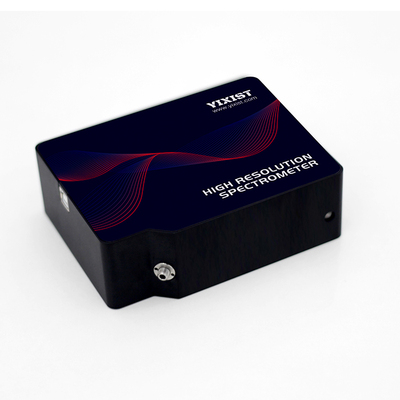
YIXIST Technology Co., Ltd. is a forward-thinking technology company that utilizes cutting-edge optical measurement technology. The company excels in research, development, manufacturing, and sales of digital and networked intelligent equipment. Founded by dedicated professors and engineers, our business philosophy revolves around "Professionalism, Concentration, and Integrity." Our company is committed to being the premier supplier and leading technology innovator in intelligent equipment manufacturing, ensuring maximum value creation for our customers on a continuous basis.
Post time: 2025-03-30 14:55:05