

YGP-6253 # Ideal Gas Law Experiment with Electric Heating
Summary
Features
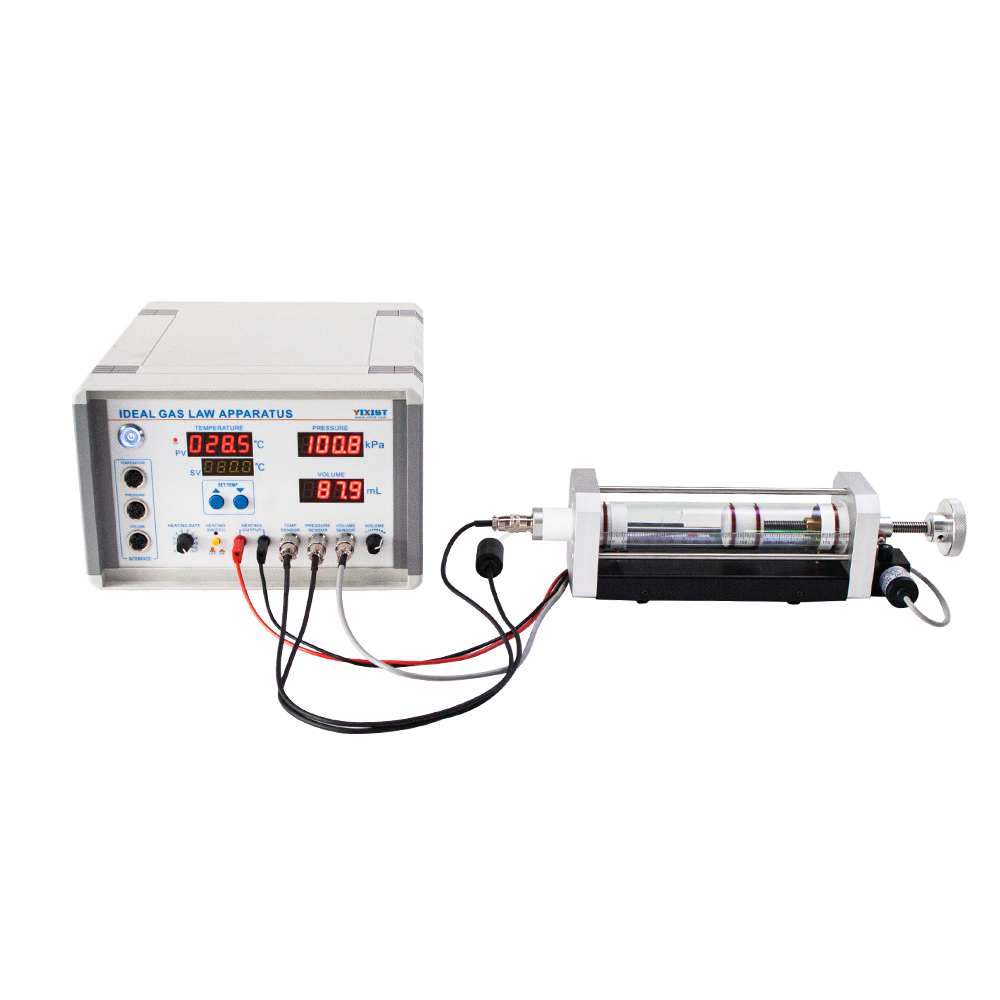
Utilizing transparent electric heating tubes for gas heating ensures visual stability.
A pressure sensor measures the pressure of the sealed gas, providing accurate and convenient readings.
A high-precision temperature sensor is employed to measure the temperature of the sealed gas, offering rapid temperature response.
Both a digital display and a transparent ruler are used to indicate volume, minimizing visual errors.
The temperature control system employs a PID control module, allowing for more precise and controllable temperature regulation.
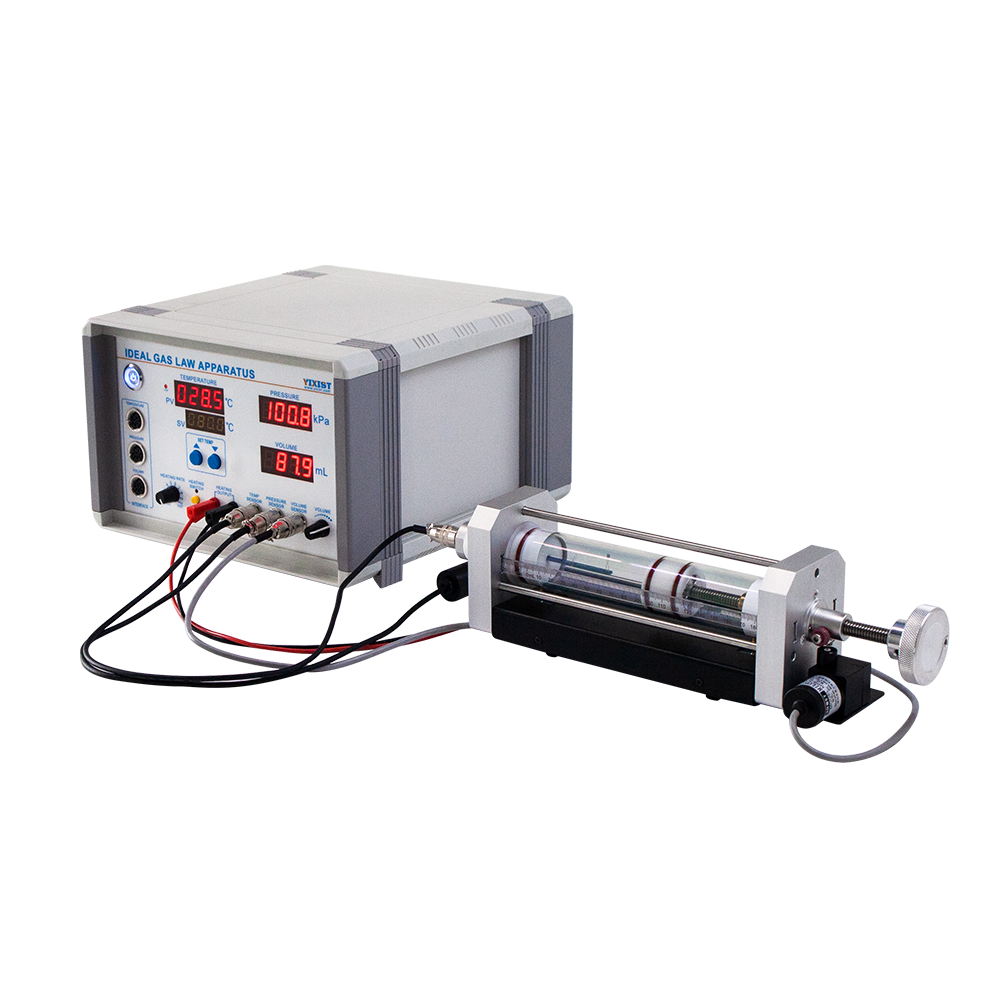
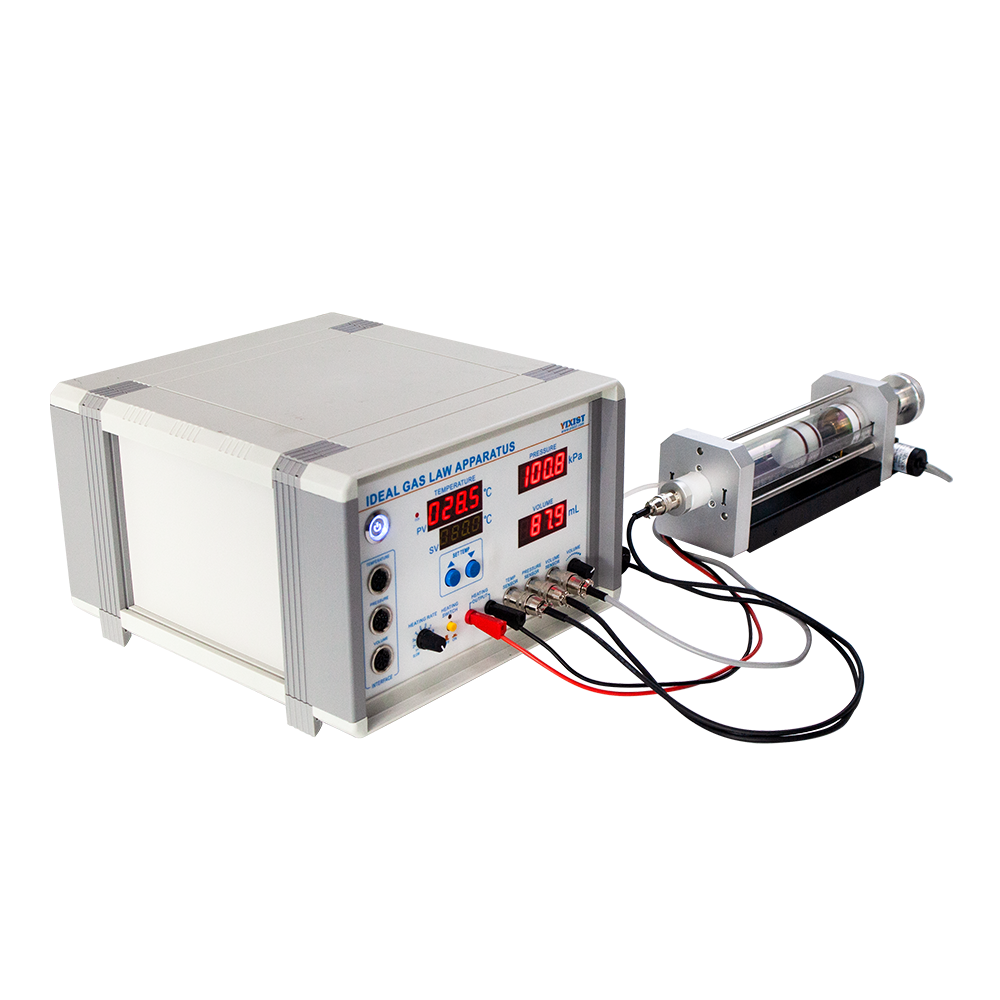
The open design makes all components visibly accessible, enabling users to observe the operational status of each sensor.
The system is highly extensible, with each sensor equipped with a data communication interface, facilitating the upgrade to a digital experimental setup.
The ideal gas law, also known as the ideal gas equation or universal gas law, describes the relationship between pressure, volume, amount of substance, and temperature of an ideal gas in equilibrium. It is based on empirical laws such as Boyle's law, Charles's law, and Gay-Lussac's law. This experiment aims to validate the ideal gas law by measuring the pressure (p), volume (V), and temperature (T) of a fixed mass of gas sealed within a transparent electric heating tube. The experimental setup alters the gas volume by rotating a large nut to move a piston, while the gas temperature is adjusted through uniform heating of the transparent electric tube. The gas inside the tube can communicate with the external air or pressure sensor via a gas pipe, and the temperature of the gas is measured using an integrated temperature sensor.
The concepts involved in this experiment include the definition of an ideal gas, the three fundamental laws, PID temperature control, temperature measurement, pressure measurement, and volume measurement. Through this experiment, students can develop a profound understanding of the interrelationship among temperature, pressure, and volume, as well as enhance their skills in estimating measurement errors and analyzing their causes in thermodynamic measurements.
Experiments
Investigate the relationship between pressure and volume of a fixed mass of gas under isothermal conditions to validate Boyle's-Mariotte Law.
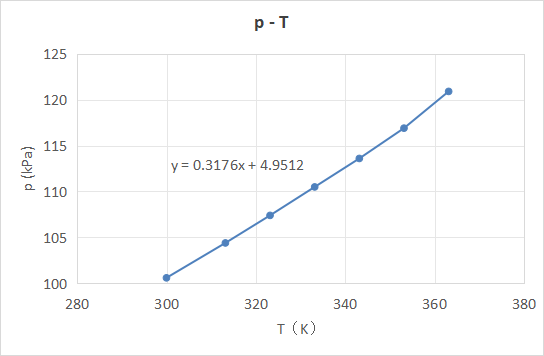
Examine the relationship between temperature and pressure of a fixed mass of gas under isochoric conditions to confirm Charles's Law.
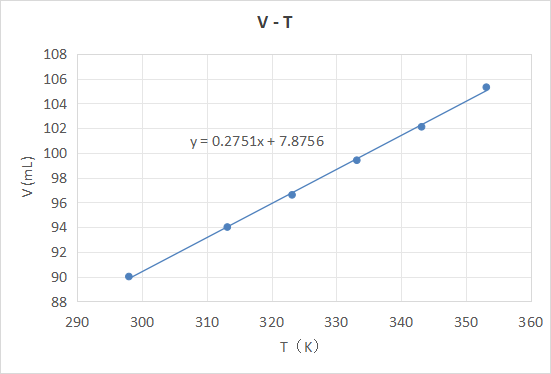
Analyze the relationship between temperature and volume of a fixed mass of gas under isobaric conditions to verify Gay-Lussac's Law.
Measure the amount of substance of a sealed gas and calculate the universal gas constant.
The concepts involved in this experiment include the definition of an ideal gas, the three fundamental laws, PID temperature control, temperature measurement, pressure measurement, and volume measurement. Through this experiment, students can develop a profound understanding of the interrelationship among temperature, pressure, and volume, as well as enhance their skills in estimating measurement errors and analyzing their causes in thermodynamic measurements.
Experiments
Investigate the relationship between pressure and volume of a fixed mass of gas under isothermal conditions to validate Boyle's-Mariotte Law.
Examine the relationship between temperature and pressure of a fixed mass of gas under isochoric conditions to confirm Charles's Law.
Analyze the relationship between temperature and volume of a fixed mass of gas under isobaric conditions to verify Gay-Lussac's Law.
Measure the amount of substance of a sealed gas and calculate the universal gas constant.
Features
Utilizing transparent electric heating tubes for gas heating ensures visual stability.
A pressure sensor measures the pressure of the sealed gas, providing accurate and convenient readings.
A high-precision temperature sensor is employed to measure the temperature of the sealed gas, offering rapid temperature response.
Both a digital display and a transparent ruler are used to indicate volume, minimizing visual errors.
The temperature control system employs a PID control module, allowing for more precise and controllable temperature regulation.
The open design makes all components visibly accessible, enabling users to observe the operational status of each sensor.
The system is highly extensible, with each sensor equipped with a data communication interface, facilitating the upgrade to a digital experimental setup.
Send Message