

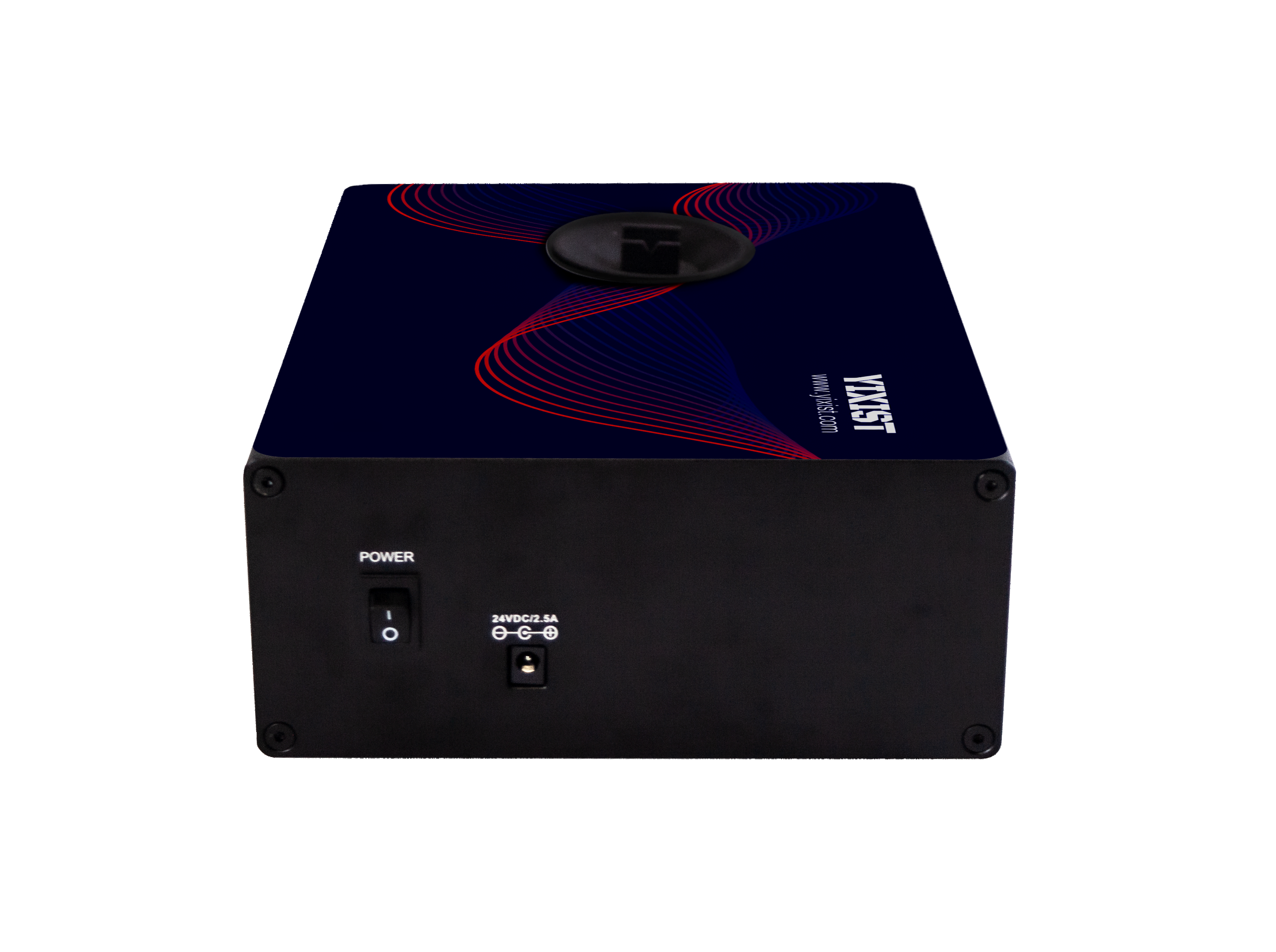
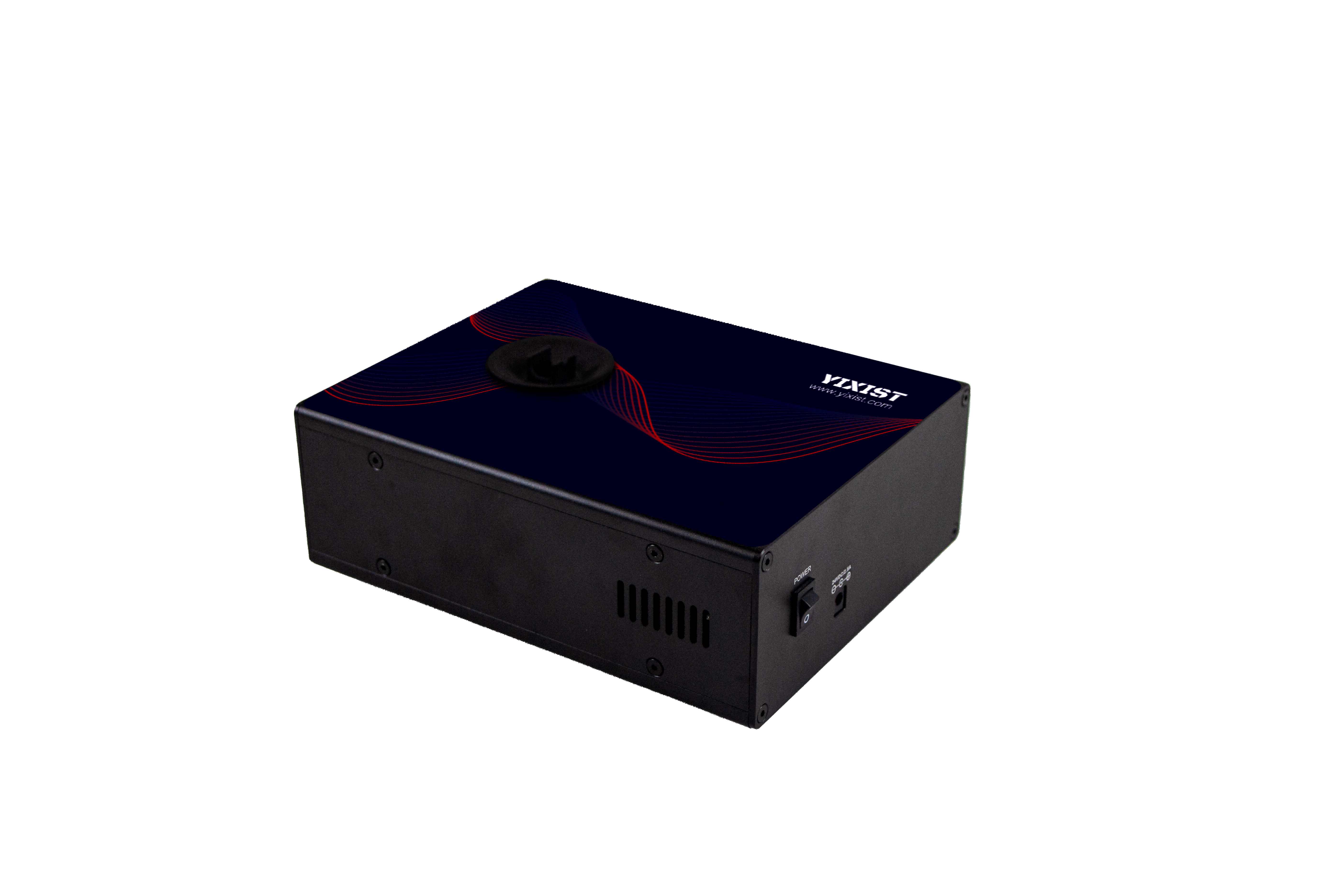
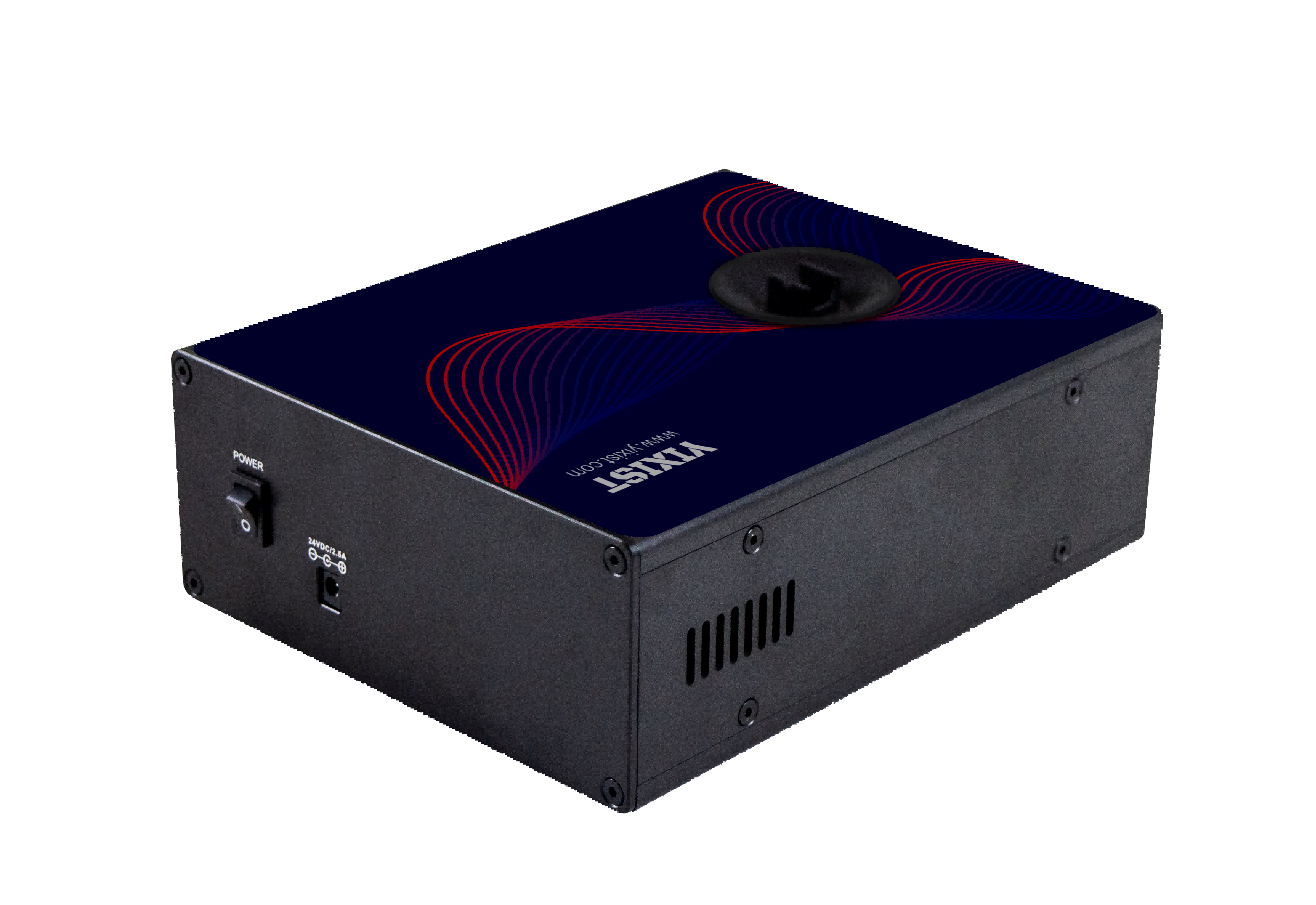
YTR-6315 # UV-VIS Spectroscopy Experiment
Summary
Because the energy level distributions of atoms, ions, and molecules are characteristic of different substances, the corresponding energies of absorbed and emitted photons are also characteristic. The chemical composition and relative abundance of a substance can be determined by measuring these characteristic spectral lines. This method of substance identification is known as spectroscopy. Based on the principle of grating diffraction spectroscopy, this experiment utilizes an array detector and linear variable filter technology, optimized optical path and circuit design, and miniaturization of a ultraviolet-visible (UV-Vis) light source to develop a UV-Vis spectrophotometer with a wavelength range of 180-1100 nm and a resolution of approximately 1.5 nm. This instrument is capable of performing both emission and absorption spectroscopy experiments. The key concepts covered in this experiment include wavelength, resolution, transmittance, absorbance, and the Beer-Lambert Law. Through this experimental setup, students can cultivate their scientific thinking and experimental design capabilities.
Features
- Spectral measurement range: 180-1050 nm
- 2048-pixel CMOS ultraviolet high-sensitivity detector with millisecond-level spectral acquisition speed
- Integrated cooled 200-1100 nm light source
- Supports USB hot-swapping
- Signal-to-noise ratio: 600:1
- A/D converter: 16-bit
- Linear variable filter for elimination of second-order and higher-order diffraction spectra
- SMA905 reflective fiber optic probe for convenient measurement of emission spectra
- Dedicated spectral analysis software with SDK support for secondary development
Experiments
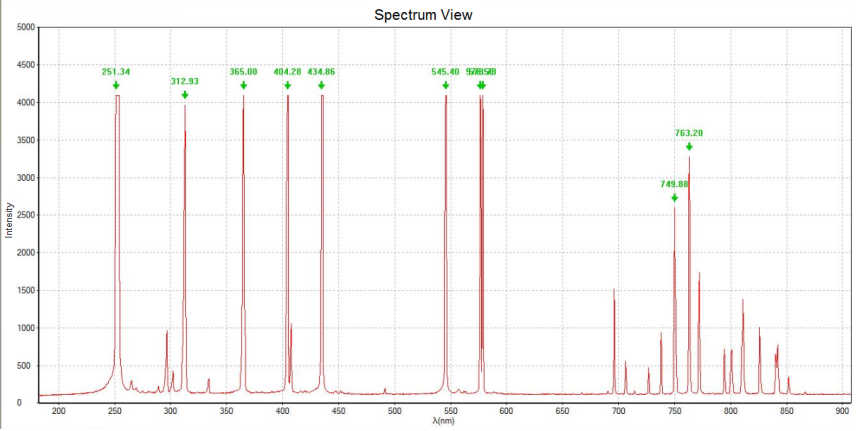
1. Determination of spectra from various light sources, encompassing an understanding of their emission principles (requires configuration with a fiber optic adapter and fiber).
2. Transmittance measurement.
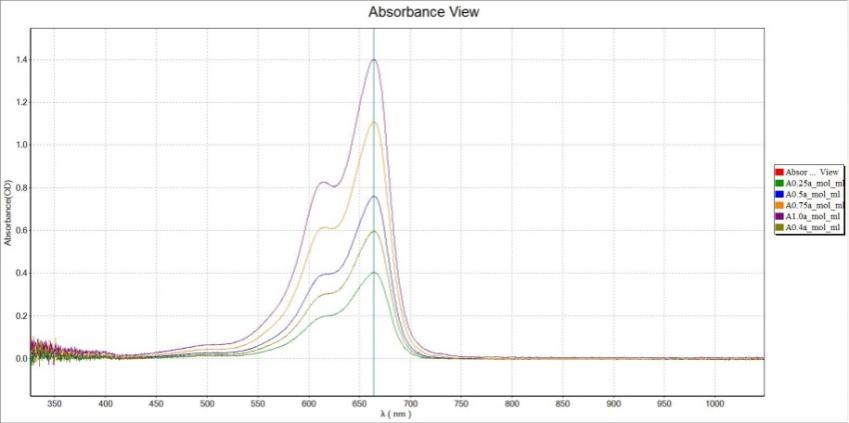
3. Absorbance measurement.
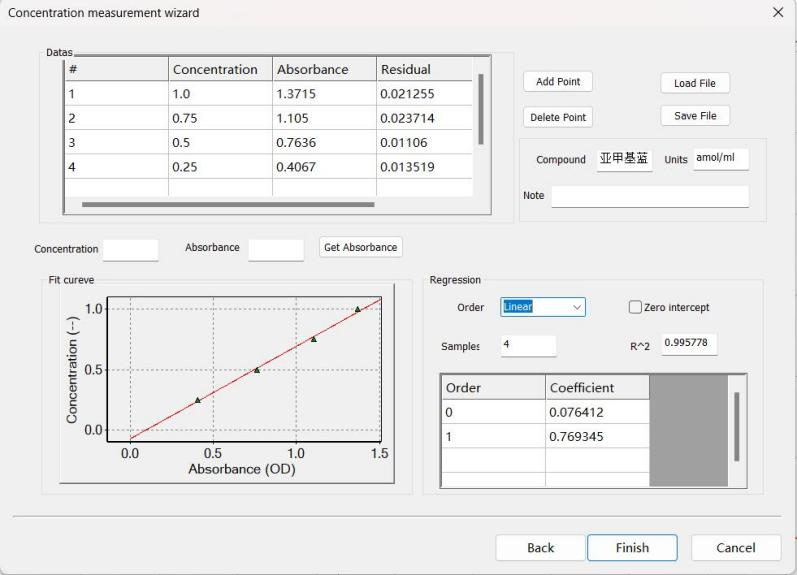
4. Concentration determination.
5. Measurement of reaction rates or decay rates.
6. Assessment of compound purity.
Features
- Spectral measurement range: 180-1050 nm
- 2048-pixel CMOS ultraviolet high-sensitivity detector with millisecond-level spectral acquisition speed
- Integrated cooled 200-1100 nm light source
- Supports USB hot-swapping
- Signal-to-noise ratio: 600:1
- A/D converter: 16-bit
- Linear variable filter for elimination of second-order and higher-order diffraction spectra
- SMA905 reflective fiber optic probe for convenient measurement of emission spectra
- Dedicated spectral analysis software with SDK support for secondary development
Experiments
1. Determination of spectra from various light sources, encompassing an understanding of their emission principles (requires configuration with a fiber optic adapter and fiber).
2. Transmittance measurement.
3. Absorbance measurement.
4. Concentration determination.
5. Measurement of reaction rates or decay rates.
6. Assessment of compound purity.
Send Message